Will Siquijor, the Healing Island, still have healers?
Siquijor is proud to be Healing Island.
But lately, there's one question that's been on my mind:
Who will be the physicians 30 or 40 years from now?
Many still believe that traditional healers should provide services for free, at very little cost, or only accept voluntary donations. Perhaps it is time to rethink this view in light of the current state of the world.
Can we realistically expect a young person to spend many years studying this path while also trying to build a good future for themselves and their family?
Traditional healers do not become healers overnight. They spend many years learning from elders, identifying and studying medicinal plants, gaining practical experience, and preserving knowledge passed down from one generation to the next.
This knowledge is achieved through dedication, discipline, and lifelong learning.
When an elder physician passes away without a disciple to carry on his knowledge, we also lose the knowledge that took a lifetime to learn—knowledge that we may never fully regain.
This issue is not just about supporting physicians. It is also about keeping a body of knowledge alive for future generations.
Perhaps, over time, we have mistaken the two for the same thing. humility and difficulty.
Humility is a good quality. Poverty is not.
A physician should never be taken advantage of by another. That principle should not change.
But we also should not think that in order to maintain a tradition, the people who carry it on and continue it must suffer in life.
If we expect many years of study, dedication, and service from future physicians, how can we expect them to maintain this kind of commitment and accountability?
If we truly want to stay Healing Island Siquijor, we also need to make it possible for the next generation to continue this tradition.
Because traditions don't stay alive just because we admire them.
They remain alive because each generation makes it possible to pass them on to the next.
As I ponder this, I think of my own teachers.
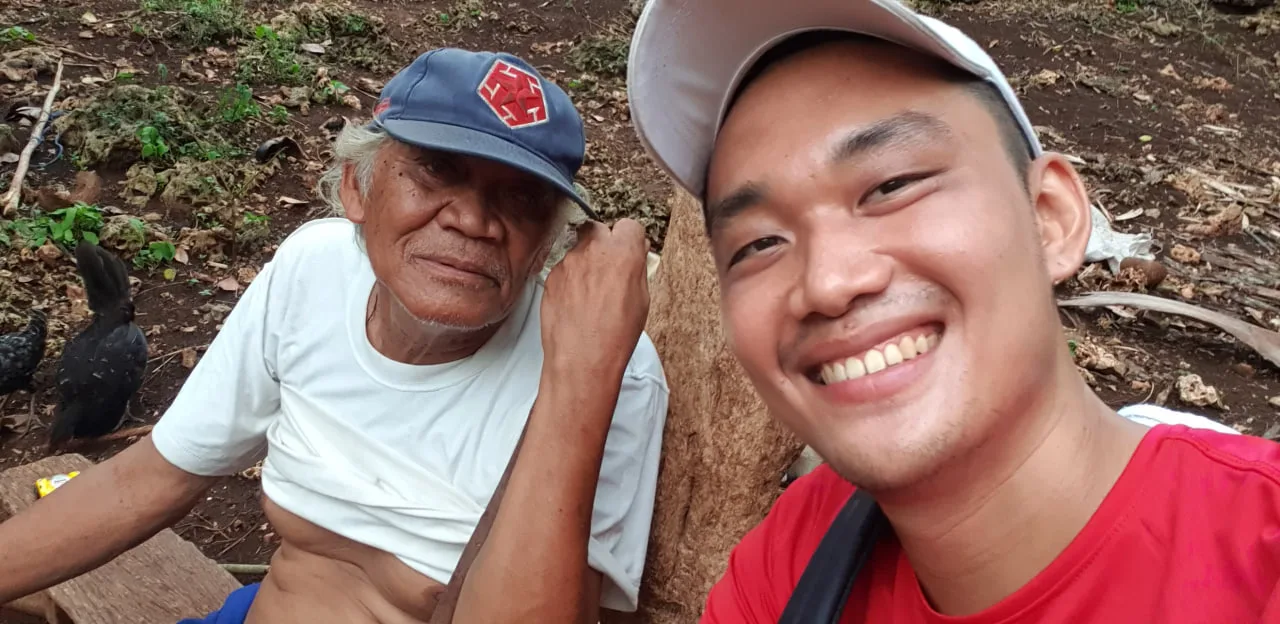
The man in the picture is Grandpa Badeh, one of my traditional medicine teachers and father of Sister TC, who also became one of my teachers.
I was fortunate to have the opportunity to learn from both of them.
Grandpa Badeh dedicated a large part of his life to preserving and sharing the medical knowledge entrusted to him.
I am so grateful that I was one of the people he chose to teach.
The knowledge they shared with me was not learned overnight. It was passed down from one generation to the next and entrusted to those who were willing to learn.
Like all physicians, they also faced the realities of daily life.
They have families to support, responsibilities to fulfill, and practical needs to be met.
Their vocation as physicians did not save them from these realities.
Because I had the opportunity to learn from them, I can say that this issue is not just a theory or a distant idea for me.
This comes from my personal experience and my deep respect for the tradition they entrusted to me.
That's why this issue is important to me.
I hope that, decades from now, there will still be elders willing to teach—and youth willing and able to dedicate their lives to learning—so that Siquijor's healing traditions will remain a living tradition, and not just a story we tell about our past.
I share these thoughts with deep respect for all the physicians who have come before us, those who continue to serve today, and those who may one day choose to carry on and continue this tradition for future generations.